
Fit-Out vs Renovation – What’s the Difference

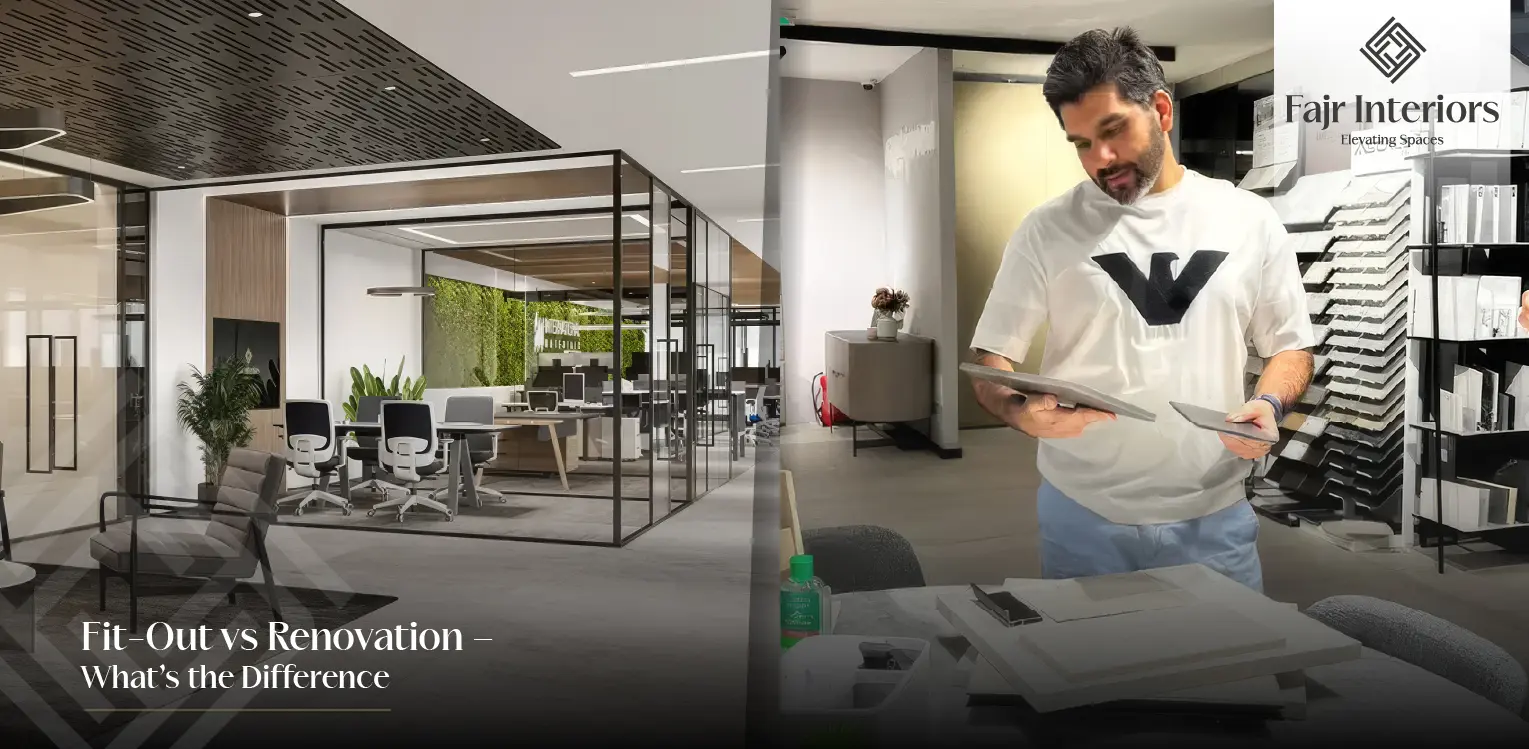
When planning a new office, retail space, or home upgrade, people often use fit-out and renovation as if they mean the same thing. They don’t. The difference affects cost, timelines, approvals, and how smoothly the project runs. At Fajr Interior, every project starts by defining whether the space needs a full interior fit-out or a renovation upgrade. That clarity helps clients avoid delays, budget overruns, and design confusion later.
What is an Interior Fit-Out?
A fit-out turns an empty or shell-and-core property into a fully usable space. Think of it as building the interior environment from the ground up. This includes partitions, ceilings, flooring, lighting systems, MEP services, joinery, and final finishes.
Businesses usually require fit-out services when moving into new commercial units, leased offices, or retail outlets. The goal is simple: make the space operational, compliant, and aligned with brand identity.
Typical fit-out work includes:
1. Workspace layout planning
2. Electrical and HVAC installation
3. Custom furniture and joinery
4. Interior branding and finishing
5. Compliance with building authority standards
Fit-outs focus on functionality first, then aesthetics.
What is Renovation?
Renovation improves or updates an already finished space. Instead of starting from scratch, renovation reshapes what already exists. This may involve redesigning layouts, replacing outdated materials, upgrading lighting, or strengthening structural elements.
>Property owners usually renovate when interiors begin to feel dated, inefficient, or misaligned with modern design standards. Renovation also plays a key role in increasing property value or improving rental appeal, often involving services like architecture, interior design, and renovation planning.
Common renovation upgrades include:
1. Layout reconfiguration
2. Material and finish replacement
3. Lighting and ceiling redesign
4. Structural repairs or enhancements
5. Interior modernisation, often aligned with office fitout requirements
Renovation focuses on transformation and improvement rather than initial setup.
Fit-Out vs Renovation – Comparison Table
| Aspect | Interior Fit-Out | Renovation |
|---|---|---|
| Project Starting Point | Begins in shell-and-core or empty space | Starts in an already completed interior |
| Purpose | Makes a space operational and usable | Improves, upgrades, or modernises existing interiors |
| Scope of Work | Includes partitions, MEP, ceilings, flooring, joinery, branding | Includes layout changes, material replacement, structural improvements |
| Design Approach | Functionality and compliance first, then aesthetics | Aesthetic enhancement and performance improvement' |
| Cost Structure | Higher initial investment due to full interior build | Cost depends on extent of modifications and demolition' |
| Timeline | Structured phases from design to final handover | Depends on complexity of upgrades and operational constraints |
| Authority Approvals | Often required for commercial compliance | Required mainly for structural or major layout changes |
| Impact on Operations | Usually done before occupancy | Often executed while property is in use |
| Project Objective | Create a ready-to-operate environment | Enhance efficiency, value, or design appeal |
| Typical Users | New office tenants, retail brands, commercial developers | Property owners, businesses upgrading existing spaces |
Fit-Out vs Renovation – Key Differences
Understanding how these two approaches differ helps in planning the right construction strategy.
1. Fit-out begins inside an empty structure
2. Renovation modifies an existing interior
3. Fit-out prepares a space for operational use
4. Renovation enhances performance and visual appeal
5. Fit-out often follows developer handover stages
6. Renovation occurs during the property lifecycle
In simple terms, fit-out creates functionality. Renovation improves it.
Types of Commercial Fit-Out
In commercial construction, fit-outs are often classified into stages.
Category A Fit-Out
Basic interior setup including ceilings, lighting, HVAC, and raised flooring. This prepares the space for tenant customisation.
Category B Fit-Out
Full interior customisation such as branding, partitions, meeting rooms, furniture, and design detailing.
Turnkey Fit-Out
Complete design-to-delivery execution handled by a single contractor. Clients move into a ready-to-operate space.
Cost Difference Between Fit-Out and Renovation
Costs vary based on scope, materials, approvals, and design complexity.
1. Fit-out projects usually involve higher initial investment because systems and interiors are built from scratch
2. Renovation costs depend on the extent of structural and aesthetic upgrades
3. Commercial fit-outs often include compliance and technical installation costs
4. Renovation budgets fluctuate based on demolition, redesign, and material replacement
A clear project scope helps avoid unexpected financial pressure later.
Fit-Out vs Renovation Timeline – Project Duration Differences
Time planning is another major difference.
1. Fit-outs follow structured construction phases from design to handover
2. Renovation timelines depend on demolition complexity and operational constraints
3. Commercial renovations may require phased execution to avoid business disruption
Professional scheduling reduces project delays and ensures smooth coordination between contractors and consultants.
When Should You Choose a Fit-Out?
A full interior fit-out makes sense when:
1. You move into a shell-and-core property
2. Your business requires custom workspace planning
3. Building compliance approvals are necessary
4. You want end-to-end interior execution
5. Brand identity needs complete spatial integration
Fit-outs are ideal for new beginnings.
When is Renovation the Better Option?
Renovation becomes the right choice when:
1. Interiors feel outdated or inefficient
2. Layout optimisation improves productivity or lifestyle
3. Structural upgrades are required
4. Property resale or rental value needs improvement
5. Business expansion demands design refresh
Renovation works best for evolution rather than creation.
Why Professional Planning Matters
Interior construction decisions influence long-term operational efficiency, maintenance costs, and user experience. A structured approach ensures that design vision aligns with technical execution.
At Fajr Interior, project planning includes feasibility studies, material quality control, authority coordination, and site supervision. This ensures each fit-out or renovation delivers measurable performance, not just visual appeal.
FAQs
What is the difference between fit-out and renovation?
Fit-out prepares an empty space for use, while renovation upgrades or modifies an existing interior.
What is the difference between fit-out and refurbished?
Refurbishment focuses on restoring or refreshing interiors, whereas fit-out involves full interior installation in a new or shell space.
Fit-out refers to completing inte
What is the meaning of fit-out?ior construction and design work to make a space functional and ready for occupancy.
What are the three types of renovation?
Renovation typically includes cosmetic upgrades, structural modifications, and complete redesign transformations.
